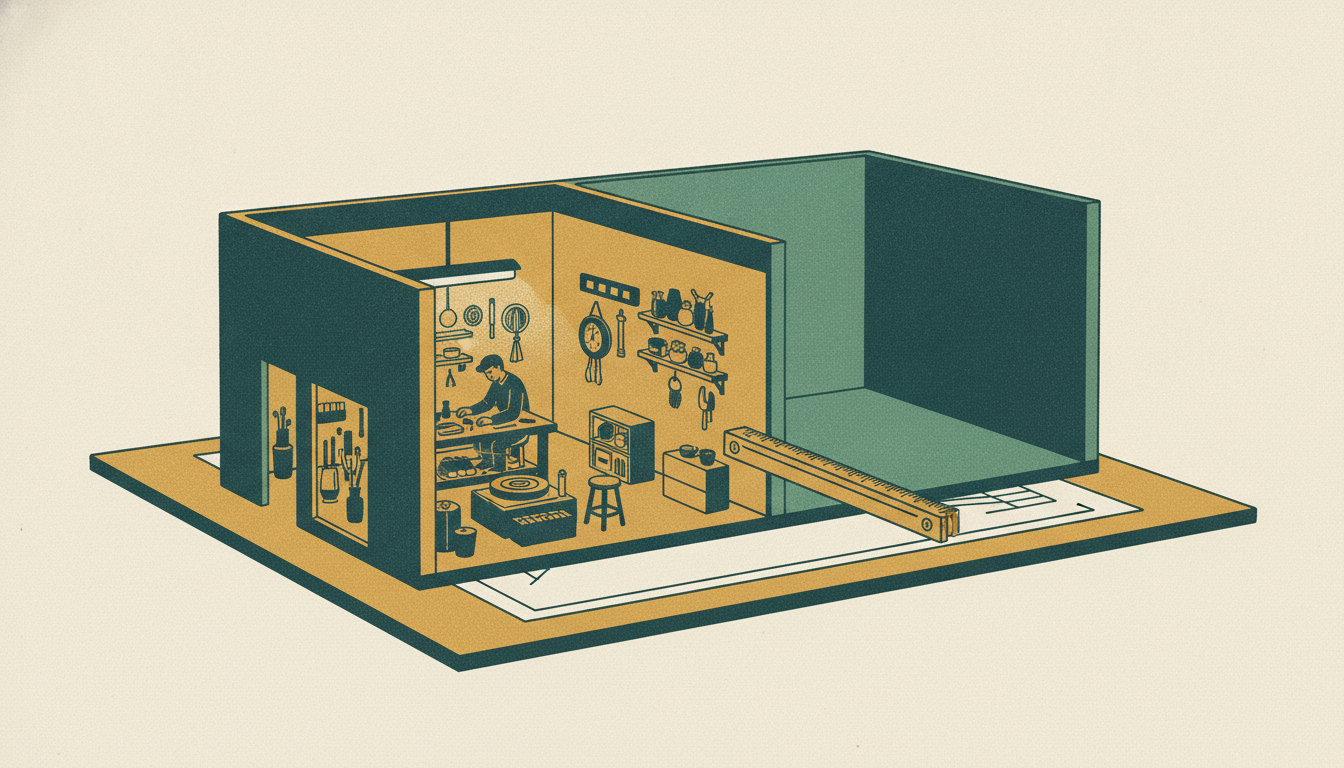
"Love the building. But your bakery only uses 46.7% of it. We can't do this as a 7(a)." Juno (a made-up founder) had a signed contract on a $900,000 two-story building and $25,000 in earnest money down. The plan she'd seen all over TikTok was simple: buy the building and let the upstairs tenants cover the mortgage. One Square-footage sheet stopped it.
This is general information, not legal or financial advice. Confirm every rule against the current SOP and your lender before you sign anything.
The one tip
Before you sign a purchase contract on a building, measure how much of it your business will actually use. If you're buying an existing building with an SBA 7(a) loan, your business has to occupy at least 51% of the Rentable Property. You can lease out the other 49%, and no more.
That's 13 CFR 120.131, and SBA SOP 50 10 8.1 (effective October 1, 2026) repeats it. For new construction the bar is higher: you have to occupy 60%, you can permanently lease up to 20%, and you can temporarily lease another 20% if you plan to use some of it within 3 years and all of it within 10.
How the Square feet get counted matters. Rentable Property is the total Square footage of the buildings used for business operations. Stairways, elevators and mechanical rooms are left out. Common areas like a lobby or a shared hallway are in, and the SOP lets the lender count all of the common area toward your share.
Two more rules catch people. First, you can't use loan proceeds to improve or renovate any space you'll lease to a tenant, so the money to fix up the rental suites comes from you. Second, if a tenant's existing lease still has a few months left, the lender can give you time after closing to move into that space, but never more than 1 year.
Worked example
Here's Juno's building, using made-up but real-sized numbers. The Rentable Property is 6,000 Square feet:
- Her bakery, Crumbhollow Bakery (a made-up bakery), on the ground floor: 2,500 sq ft
- Shared lobby and hallway (common area): 300 sq ft
- Three upstairs office suites she planned to rent out: 3,200 sq ft
Her share is 2,500 plus 300, or 2,800 sq ft. That's 46.7%. She needs 51% of 6,000, which is 3,060 sq ft. She's 260 Square feet short.
The fix: she takes Suite C, 600 sq ft upstairs, for her office and online-order packing. Now she uses 3,400 sq ft, or 56.7%. Tenants lease 2,600 sq ft, or 43.3%, which is under the 49% cap. Suite C's tenant has 7 months left on their lease, so she asks the lender for time to move in after closing, which has to be under the 1-year limit.
The cost is real but smaller than a dead deal. At an assumed $1.50 per sq ft per month (an example, not a market quote), the rent roll drops from $4,800 to $3,900 a month. And the $60,000 she budgeted to redo the rental suites can't come from the loan.
The loan itself: her lender wants 10% down, or $90,000. That's this lender's requirement, not an SBA minimum for an existing business. The loan is $810,000. At an assumed 10% rate over 25 years (an example, not a quote), the payment is about $7,360 a month, or about $88,300 a year. SBA wants debt service coverage of at least 1.15, so she needs about $101,600 a year in cash flow available for debt. The bakery alone shows $118,000, a DSCR of about 1.34. The tenants' $3,900 a month is a bonus, not the plan.
Do this week
Get the floor plan or a measured rent roll for the building before your financing deadline. Ask for Square footage per suite.
Do the math: your space plus common areas, divided by total Rentable Property, leaving out stairs, elevators and mechanical rooms. You need 51% for an existing building, or 60% for new construction.
If you're short, pick the space you'll take over and write down what you'll use it for, such as storage, an office or production.
Check every tenant lease for end dates. If you need a tenant out, ask your lender in writing how long it will give you after closing.
Price any work on the rental suites separately and plan to pay for it yourself.
Send the occupancy math to your lender before the earnest money goes hard, and ask them to confirm it in writing.
Sources: 13 CFR 120.131 (leasing part of new construction or an existing building), https://www.ecfr.gov/current/title-13/section-120.131 ; SBA SOP 50 10 8.1 (Section A, Ch. 3, Para. C, Occupancy and Leasing Requirements; Section B, Ch. 1, debt service coverage; Appendix 17, 7(a) loan maturities, real estate up to 25 years), download from https://www.sba.gov/document/sop-50-10-lender-development-company-loan-programs ; SBA 7(a) loans overview, https://www.sba.gov/funding-programs/loans/7a-loans
Verified against SOP 50 10 8.1 text and 13 CFR 120.131 on eCFR: October 13, 2026.