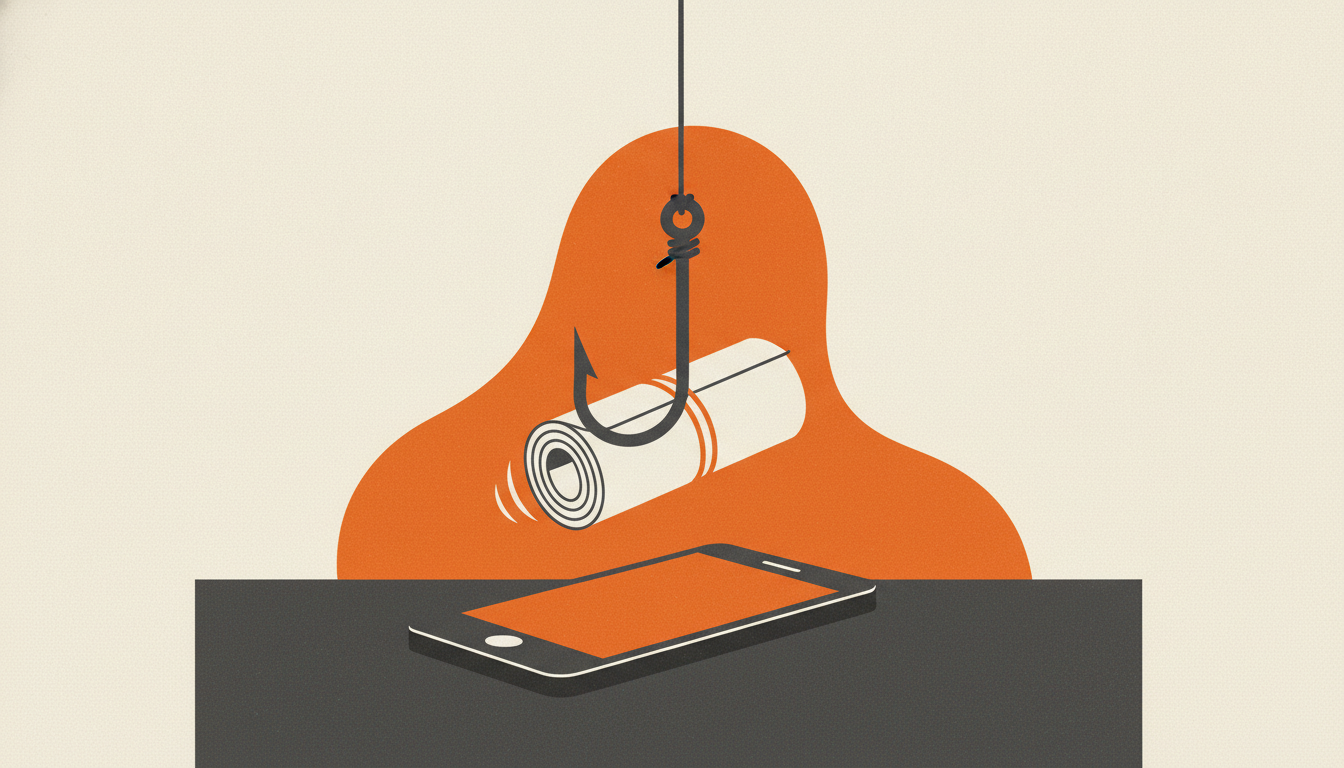
The voicemail hit at 8:12 a.m. A calm voice. A first name. "You've been preapproved for $276,000 in business funding. Most of the heavy lifting is done. Call me back so we can lock your allocation before it rolls to the next file."
She'd never applied. Her shop was behind on a supplier and she'd googled "business funding" once last week. That was enough. The callback number was sitting in her notes app before the coffee finished brewing.
Composite story. The pattern is real.
In January 2026 the FTC published a consumer alert on fake loan texts: a message that follows up on a loan you never applied for, asks you to reply YES, or sends you to a callback number to "finish" the application. BBB Scam Tracker is full of the same script aimed at small businesses — six-figure "preapprovals," urgency about a monthly funding portfolio, and a friendly ask to verify "a couple of items" so the money can go out tomorrow.
Separate FTC guidance on advance-fee loans covers the next beat: once you call back, someone asks for a processing fee, insurance fee, or paperwork fee before the money ships. There is no loan. There is no lender.
Red flags
These track the FTC's fake-loan-text alert, its advance-fee loan page, and BBB's pre-approved loan scam alerts:
- You never applied, but you're "preapproved" for a round number — $10,000, $59,000, $276,000, whatever sounds like relief.
- The text or voicemail wants a reply, a YES, or a callback to a number in the message. The FTC says don't reply and don't use that number.
- Urgency about an "allocation," a rolling review, or funds that can land tomorrow.
- They ask for your Social Security number, bank account, revenue numbers, or login to "finalize" or "deposit."
- Any fee before the money arrives — processing, insurance, paperwork, gift cards, wire, crypto. The FTC is blunt: nobody legit tells you that paying a fee guarantees the loan. Telemarketers who promise a loan and ask for payment up front before delivering it are breaking the Telemarketing Sales Rule.
- The company name sounds like a bank or "lending department" but you can't find a real license when you look it up yourself.
What to do
- Don't reply, don't click, don't call the number in the message. Delete it. Forward junk texts to 7726 (SPAM) if your phone supports it.
- If you want to check a real lender, hang up and look up their number on their official site or from a statement you already trust. Never use the number they left you.
- Check whether the lender is registered in your state with your state attorney general or banking regulator before you share anything.
- Never pay a fee to "release" funding. If you already paid by gift card, wire, or crypto, contact that company immediately, say it was fraud, and ask them to reverse it.
- Report the text, call, or fee ask at ReportFraud.FTC.gov. Also file it on BBB Scam Tracker. Those reports are what law enforcement actually uses.
- If you already gave personal information, start at IdentityTheft.gov for the next steps.
She never called back. She screenshotted the voicemail transcript and dropped it in a group chat with two other owners. One of them had the same script with a different first name and a different dollar amount. Same urgency. Same "allocation." Same request to verify a couple of items.
A real lender does not text you six figures you never asked for. A scam does.
Sources: FTC, Can you spot a fake loan text scam? (Jan. 20, 2026); FTC, What To Know About Advance-Fee Loans; BBB Scam Alert: phone scams alleging pre-approved loans and back taxes