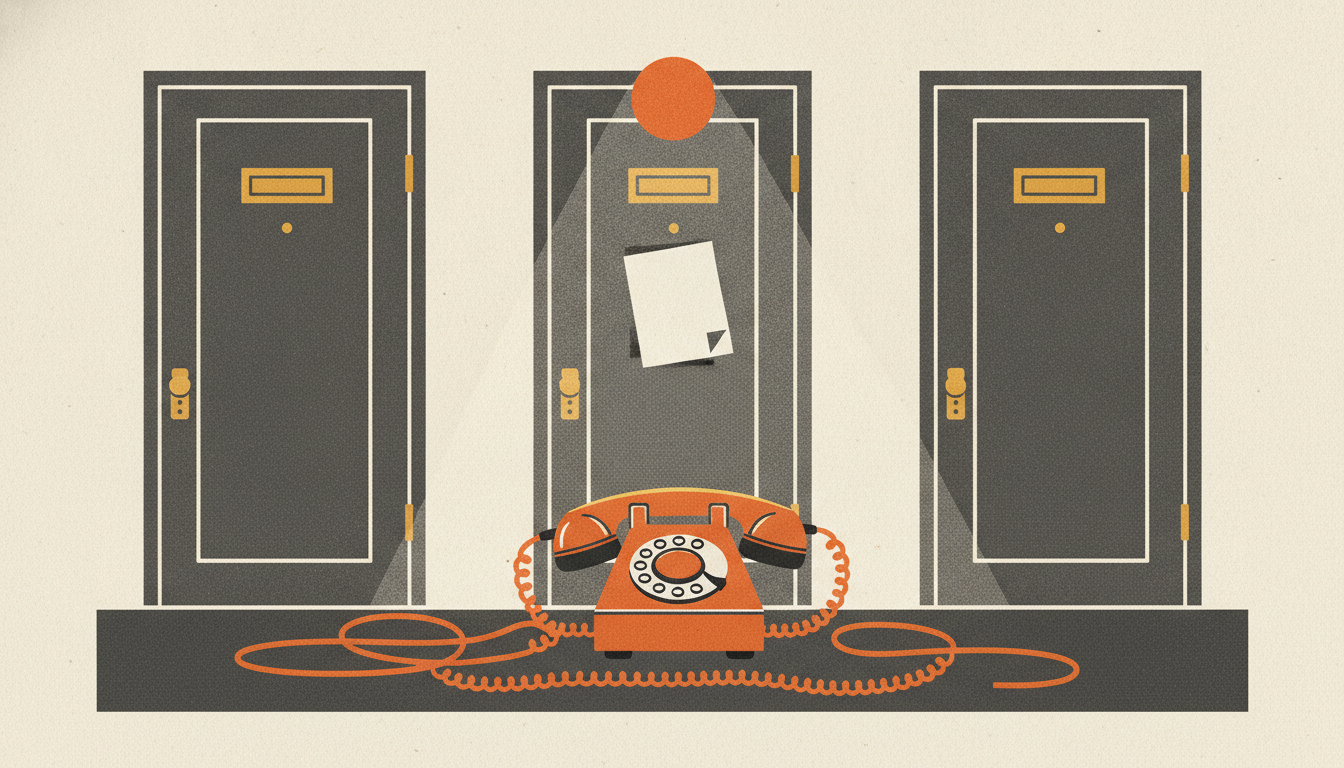
"Sir, I'll have my manager call you back." Click. Ten minutes later, a different number, same pitch. You've already said stop. You've already emailed stop. Call twelve is still ringing. So which form do you actually file?
Today is the report map: which federal door matches which call, what to copy from your log into the fields, and what the agencies say happens after you hit submit.
New here? Earlier parts covered the phone script, the written stop, the call log, consent claims, calling hours, and more. Full series: https://mcafax.com/notebook/series/stop-the-calls
General information, not legal advice.
Three doors, one rule
Pick the door that matches what happened. Don't overthink the brand name on the caller ID.
1. Unwanted sales or Do Not Call report (no money lost)
Use the streamlined form at https://www.donotcall.gov/report.html. The FTC says: if you didn't lose money and just want to report a call, use DoNotCall.gov. Source: https://consumer.ftc.gov/articles/national-do-not-call-registry-faqs
2. Money lost, or you have details on the company or scammer
File at https://reportfraud.ftc.gov. Same FTC FAQ page: use ReportFraud.FTC.gov when you lost money to a phone scam, or when you have information about the company or scammer who called you.
3. Robocalls, robotexts, spoofing, blocked or mislabeled numbers
File with the FCC at https://consumercomplaints.fcc.gov (pick unwanted calls / robocalls). The FCC uses complaints to guide enforcement under the Telephone Consumer Protection Act and related rules. It does not promise to resolve your individual case. Source: https://www.fcc.gov/consumers/guides/stop-unwanted-robocalls-and-texts
Coverage still depends on the call and the line. The National Do Not Call Registry is for personal phone numbers. Business phone numbers and fax lines are not covered (FTC FAQ above). You can still report what you got. Reporting is not the same as registering a business line on that list.
The tactic: fill from your call log
If you keep the Part 3 log, open it and copy. Free CSV: https://mcafax.com/notebook/toolkit/call-log-template
The FTC asks reporters to include, when they can:
- Your number (the one that rang)
- The number on caller ID, even if you think it's spoofed
- Any number they told you to call back
- The date and time of the call
Source: https://consumer.ftc.gov/articles/national-do-not-call-registry-faqs
Add three more lines from earlier parts when they fit:
- The stop date and channel (Part 1 script / Part 2 written stop)
- The consent claim they made, word for word (Part 10)
- Local time if it was early or late (Part 11; 47 CFR 64.1200(c)(1))
For an FCC complaint, investigators care about the number that was dialed, the displayed caller ID, date and time (with time zone if you can), whether it was a landline or wireless phone, and your contact info. Source: https://www.fcc.gov/enforcement/areas/unwanted-communications
Two-minute script before you file (optional, same day as the call):
"I'm reporting this call. Put this number on your internal do-not-call list. Do not call or text again."
If they named an opt-out word, keypress, or link, use that too. On Oct 1, 2026, the FCC released FCC 26-67, which lets senders designate an opt-out method; it takes effect 30 days after Federal Register publication, which hadn't happened as of this writing. Habit: use the method they name, note it in the log, then file.
Written stop template if you still need one: https://mcafax.com/notebook/toolkit/cease-and-desist-letter
What happens after you submit
The FTC gets millions of reports a year and says it can't respond to each one. Reports still feed enforcement and daily call-blocking data shared with carriers. The FCC says the same for individual outcomes: complaints guide policy and possible action; your case may be shared with other agencies. Nobody can promise a broker goes quiet because you filed. File anyway. Patterns need volume.
More: Know Your Rights (https://mcafax.com/notebook/series/know-your-rights) and the broker-call guide (https://mcafax.com/notebook/stop-mca-broker-calls).
Your checklist
- Open today's log row.
- Match the call to door 1, 2, or 3.
- Paste caller ID, callback number, date, time, and your stop notes into the form.
- Submit. Save a screenshot or confirmation number in the same log row.
- Starting from zero? https://mcafax.com/notebook/series/stop-the-calls
Coming in Part 13: what your phone company can block for you, and how to ask without giving up a real customer.