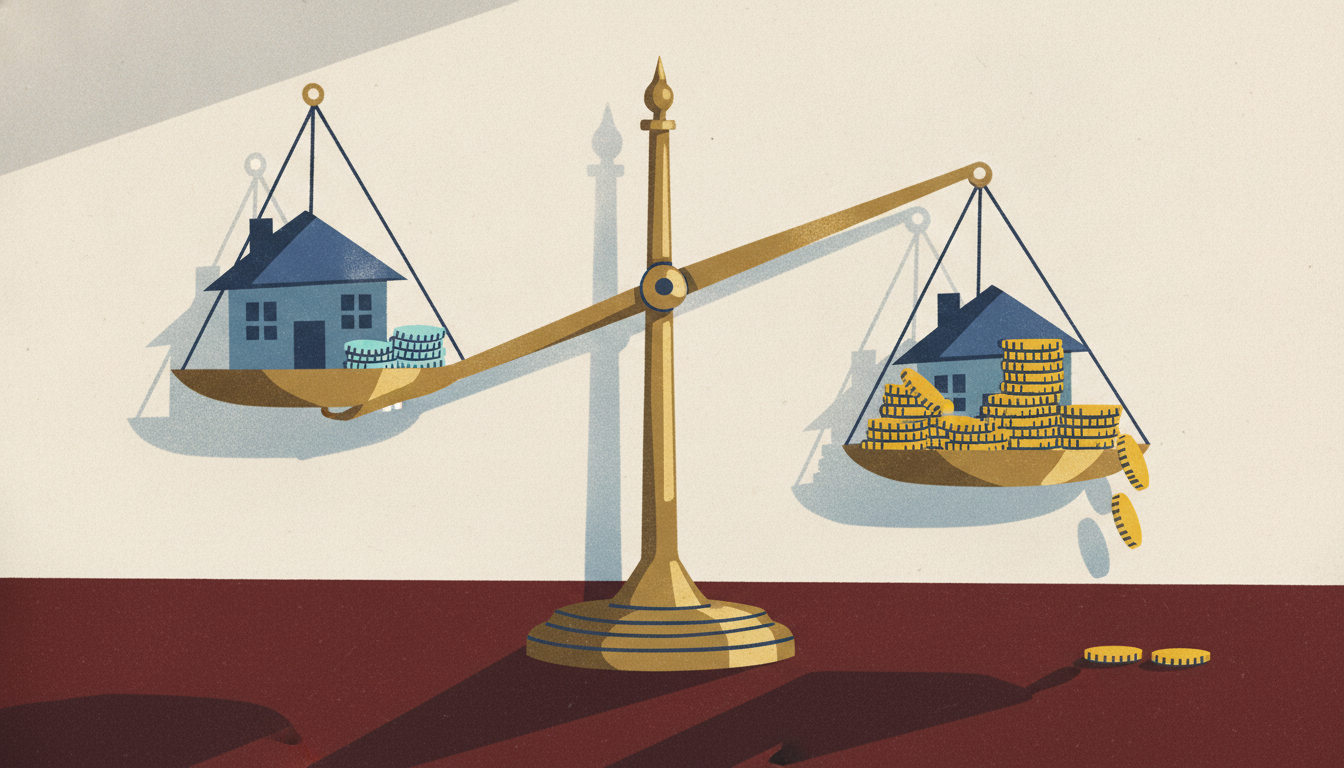
Invitation Homes Inc. (NYSE: INVH), the largest US single-family rental landlord, sold 657 homes for an average $469,569 in the second quarter of 2026 while its stock implied roughly $270,000 to $280,000 a home. REIT investor Mr Neutral Man (@Mr_Neutral_Man) flagged that gap on October 13, 2026 as a sign that public REITs trade far below private-market values. The next checkpoint is third-quarter results after the close on October 28, 2026.
This is journalism and commentary, not investment advice. We hold no position unless stated.
Key facts
- Ticker and exchange: Invitation Homes Inc., INVH, New York Stock Exchange.
- Situation type: public-versus-private value gap at a REIT that is selling homes and buying back stock.
- The call: Mr Neutral Man said on October 13, 2026 that the stock values homes at $275,000 to $280,000 each versus sales above $400,000, or about $375,000 to $380,000 excluding California; a constructive lean with no stated position.
- Price: $27.00 at the October 20, 2026 close, versus $27.79 at the end of 2025.
- Sales: 657 wholly owned homes sold for about $309 million in the second quarter of 2026, an average of $469,569.
- Buybacks: 22,812,421 shares repurchased since December 2025 for about $600 million, at an average $26.30.
- Catalyst: third-quarter 2026 results on October 28, 2026, with a webcast on October 29.
- Main risk: retail sale prices for single vacant homes may not be achievable for a portfolio of 85,509 homes.
Is Invitation Homes a good bet right now?
The case for Invitation Homes is the gap itself. Management made the same point on the Q2 2026 call: CFO Jonathan Olsen said the average buyback price implied "just over $270,000 per wholly owned home," versus a year-to-date average sale price of $450,000.
The case against is slow growth. Same-store NOI rose only 1.5% in the second quarter, new-lease rents rose 1.1%, and average occupancy slipped 20 basis points to 97.1%, per the Q2 2026 supplemental.
Why are investors bullish on Invitation Homes?
- Asset sales above the implied value. Invitation Homes raised its 2026 wholly owned disposition guidance by $300 million to an $850 million midpoint, citing "favorable private market valuations relative to public market pricing."
- Proceeds fund buybacks. Net second-quarter sale proceeds of about $234 million went to buybacks and debt paydown.
- Modest multiple. 2026 Core FFO guidance is $1.95 a share, about 13.8 times at $27.00, by our math.
- Balance sheet. Net debt was 5.4 times trailing adjusted EBITDAre at June 30, 2026, below the 5.5 to 6.0 times target, with $1,546 million of liquidity.
Who's making this call and why?
Mr Neutral Man is a pseudonymous REIT investor who writes the Hard Asset Memo Substack and posts as @Mr_Neutral_Man. On October 13, 2026 he wrote that Invitation Homes trades at $275,000 to $280,000 a home while it sold hundreds of homes at over $400,000 in the second quarter. His conclusion: "Huge gap between what's in private market and public REITs."
He adjusted for California, which skews the average. Our check of the supplemental agrees: excluding 178 Southern California sales at $669,744 and 76 Northern California sales at $489,673, the other 403 homes averaged about $377,000, by our math.
Track record. Mr Neutral Man is not yet scored in our tracking. See the scoreboard for scored accounts.
Other supporters: the strongest public supporter is management, which keeps selling homes and buying back stock on the same logic. We found no other credible X account making this specific case in the last 60 days.
Who disagrees?
- Portfolio versus retail. The sales are mostly single vacant homes, many to families buying for their own use. A bulk sale of 85,509 occupied rentals would likely not fetch retail prices.
- A new purchase limit. A law passed in July 2026 bars investors that own more than 350 homes from buying existing homes, CNBC reported. That limits Invitation Homes' own buying to new build-to-rent homes and may narrow the pool of large buyers for existing rentals.
- Prices may soften. CEO Dallas Tanner told CNBC the ban will lower home prices over time: "I believe in the medium- to long-term, it definitely will."
- Rent growth is thin. Blended same-store rent growth was 2.7% in the second quarter.
What are the key facts to verify?
- The Q2 2026 supplemental for sale prices by market, buybacks and guidance.
- The Q3 2026 date announcement.
- The CNBC interview on the July 2026 law.
What would prove it right or wrong?
Right: third-quarter sale prices stay well above the implied per-home value, buybacks continue, and the share price moves toward private-market values.
Wrong: third-quarter sale prices fall, disposition volume slows, or rent and occupancy weaken enough that the discount persists or widens.
This is journalism and commentary, not investment advice. We hold no position unless stated.