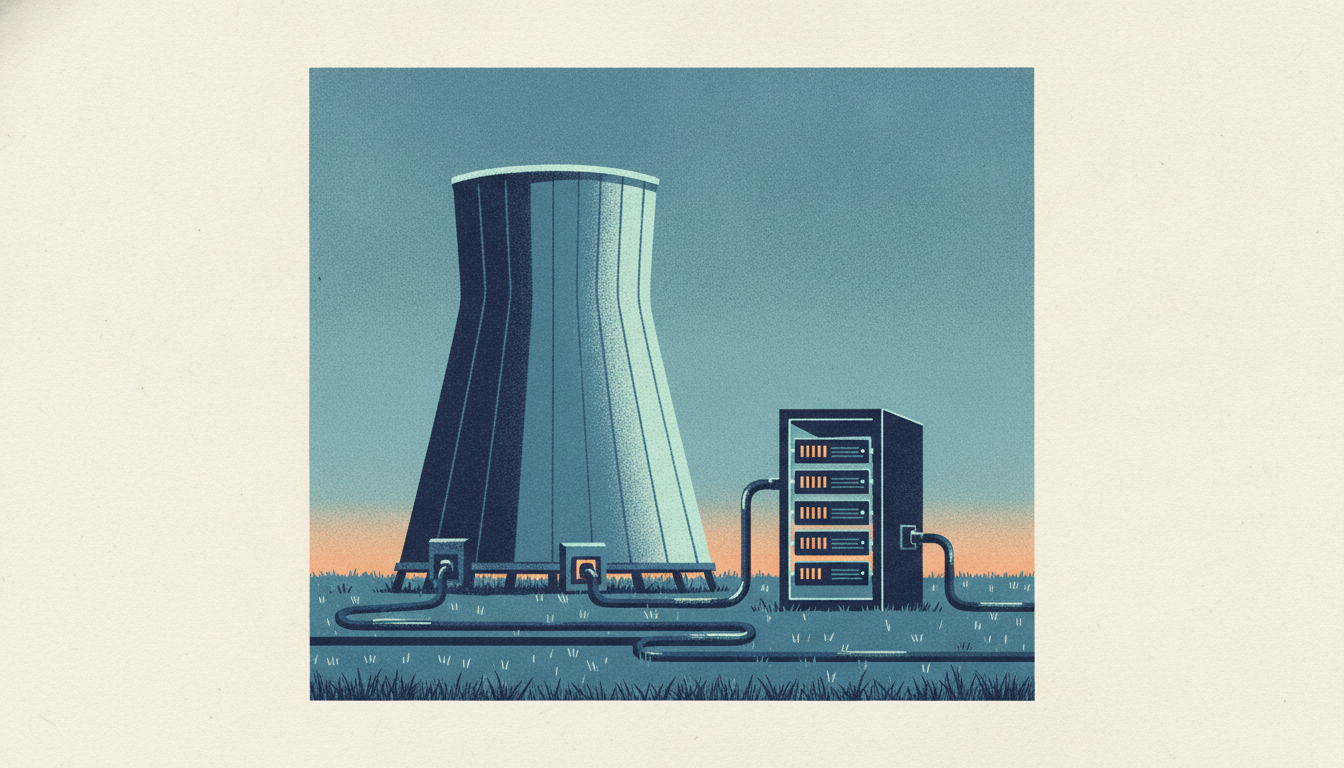
Constellation Energy Corporation (Nasdaq: CEG) closed at $275.00 on October 15, 2026. Writer Brandon Beylo (@marketplunger1) paired Constellation with Vistra on October 6, 2026 as an AI-power setup after Constellation struck a 20-year power purchase deal with Google (GOOGL) to enable 890 MW of added nuclear capacity via uprates at 11 PJM units. He summed the tape as washed-out breadth and a "Great setup."
This is journalism and commentary, not investment advice. We hold no position unless stated.
Key facts
- Ticker and exchange: Constellation Energy, CEG, Nasdaq.
- Situation type: Regulated/competitive nuclear generator leveraged to hyperscaler power demand.
- The call: Brandon Beylo long lean on utilities/nuclear after the Google uprate PPA and washed-out breadth.
- Deal: 20-year Google PPA tied to about 890 MW of nuclear uprates across 11 PJM units (as described in Beylo's October 6 post and follow-on coverage).
- Price: CEG closed at $275.00 on October 15, 2026 (as of October 15 close).
- Fresh Street note: CIBC initiation chatter on October 16, 2026 cited an Outperformer stance and a $358 target in secondary posts.
- Main risk: Crowded AI-nuclear narrative, rate/PPA execution risk and valuation if power scarcity fears fade.
Is CEG a good bet right now?
The bull case is contracted megawatts. A multi-decade Google offtake tied to uprates gives Constellation a visible path to put more nuclear megawatts into AI-driven load growth without building a greenfield reactor from scratch. Beylo put that next to Vistra's Meta nuclear supply headline and argued breadth washouts made the setup timely.
The bear case is crowding and price. Nuclear-as-AI-power became a consensus screen in 2026. CEG already trades as a large-cap compounder; if load growth slips, uprates delay or multiples compress when the narrative cools, upside from $275 can shrink quickly even if the Google contract is real.
Why are investors bullish on Constellation Energy?
- Contracted uprates. The 890 MW Google-linked uprate package is a concrete capacity add versus vague "AI needs power" slogans.
- Fleet scale. Bulls call Constellation the largest U.S. nuclear owner-operator, which matters if hyperscalers keep signing long nuclear PPAs.
- Pair trade with Vistra. Beylo's post treated CEG and VST as two sides of the same washed-out utilities setup after separate hyperscaler deals.
- Street support. Secondary posts on October 16 highlighted a CIBC Outperformer initiation with a $358 target, roughly 30% above the mid-October tape.
Who's making this call and why?
Brandon Beylo (@marketplunger1) is a markets writer with about 115,000 followers. Career tracking shows 5-16 (.238) on 21 scored calls versus the S&P 500 at 180 days, with a high average excess about +51.7 percentage points driven by outliers, ranking 8th. Hit rate is weak even when average excess looks large. See the scoreboard. On October 6, 2026 he wrote that CEG "struck a 20-year power purchase deal with $GOOGL to enable 890 MW of added nuclear capacity via uprates at 11 PJM units."
Other supporters:
- CK Capital (@CKCapitalxx) previously paired Constellation with Vistra as value plays on the AI power bottleneck (September 12, 2026).
- LongGameEquity (@LongGameEquity) called CEG "The Nuclear Energy Giant," arguing data centers need reliable power and Constellation owns the fleet.
- FrenchieBr77 (@FrenchieBr77) relayed CIBC initiation coverage at Outperformer with a $358 target tied to the Google 890 MW deal.
Who disagrees?
- Crowding critics. After Vistra's Meta deal was already widely discussed, stacking CEG into the same AI-nuclear basket risks buying the narrative after it is priced.
- Track-record caution. Beylo's .238 hit rate on scored calls is a reason to treat any single utilities post as journalism, not a scoreboard endorsement.
- Execution and policy risk. Uprates, PJM interconnection and long-dated PPA economics can slip even when press releases sound definitive.
What are the key facts to verify?
- Contracted megawatts, pricing and timing in Constellation and Google primary disclosures.
- Capex and regulatory path for the 11 PJM unit uprates.
- How much of CEG's valuation already assumes hyperscaler nuclear scarcity.
- Relative setup versus Vistra after both companies landed landmark offtakes.
What would prove it right or wrong?
Signals the thesis is working:
- Uprate milestones and Google offtake economics show up in guided earnings and cash flow.
- Additional hyperscaler PPAs clear without crushing returns on capital.
- CEG compounds versus the S&P 500 as load growth stays scarce.
Signals it is failing:
- Uprates delay, costs overrun or contracted volumes disappoint.
- The AI-power multiple derates while utilities underperform.
- Competing behind-the-meter solutions cut nuclear scarcity narratives.
This is journalism and commentary, not investment advice. We hold no position unless stated.