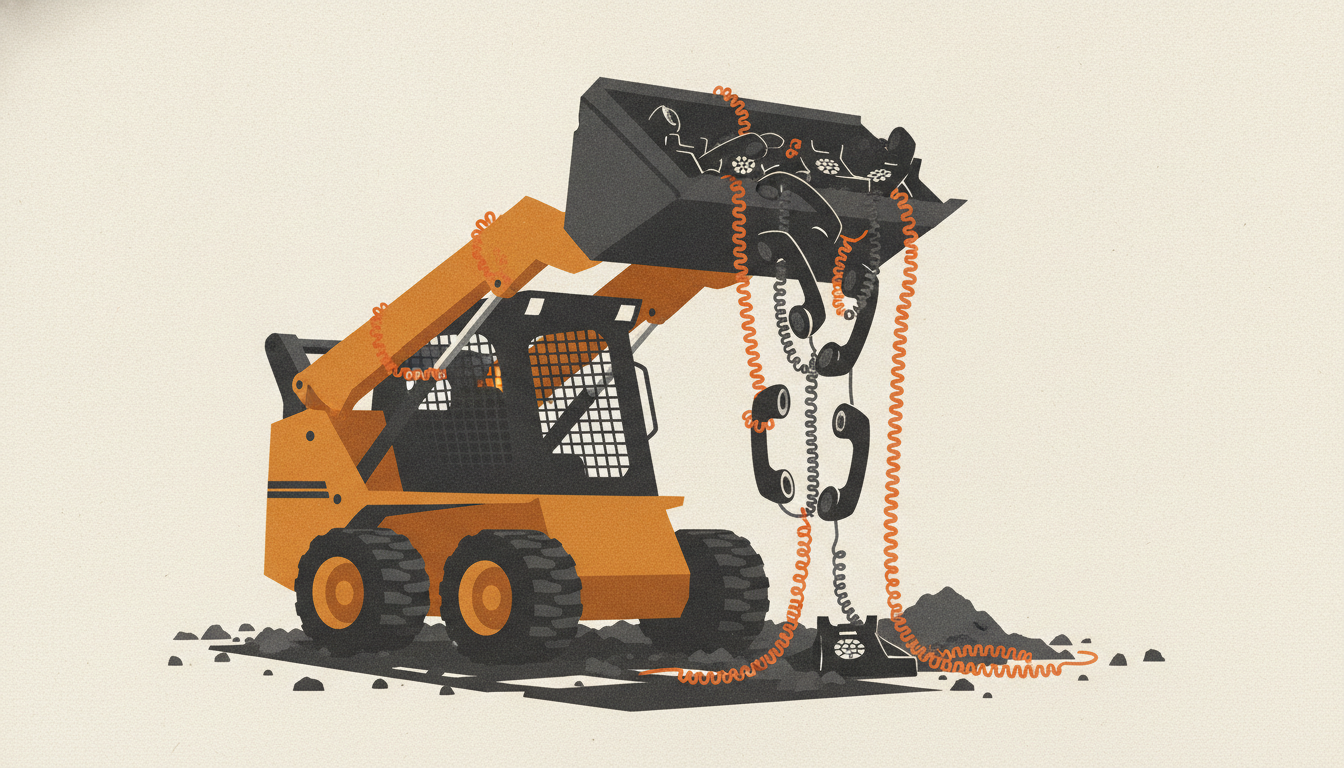
The office phone rang eleven times before lunch, two weeks after the skid steer UCC posted.
Lead sellers pull public filings, match phones, and resell lists. Clean your record, use a funding-only number next time, and keep a stop log. Volume can fall. Nothing here promises every call ends.
This is general information, not legal advice.
Why do calls jump right after a contractor gets funded?
When a funder takes collateral, it often files a public UCC-1 financing statement with the state. The filing shows a business name, a secured party, and collateral language. Lead sellers can pull fresh filings, match them to phone numbers from other sources, and sell the pack as "just funded" leads. The wave often starts days or weeks after funding, which for a contractor can land during mobilization or first-draw week.
The same spike can follow an online quote or application form that shares your number with partners. Read the consent line before you submit.
What can you check in fifteen minutes?
- Open your state's UCC search (usually the Secretary of State site).
- Search the exact legal name, then a version without LLC or Inc.
- Note file number, file date, and secured party for each hit.
- Put those dates next to your call log. If rings jumped after a filing, you found a likely feed.
- If an advance is paid off and a filing still shows, ask the secured party in writing about a UCC-3 termination. Fixing the record does not recall a list already sold.
Full UCC walkthrough: https://mcafax.com/notebook/stop-the-calls-part-4-ucc-leads
How do you cut the next wave without wrecking the shop line?
Use a second number and a separate email only for funding forms. Put those on applications instead of the crew cell or front-desk line. If that funding number gets noisy, screen it or retire it without changing the number GCs and suppliers already know.
On every live pitch, use a short script, then hang up: "Put this number on your company's internal do-not-call list. Do not call, text, or email again, and do not share my number with partners. What is your company's legal name and a callback number?"
Log date, time, caller ID, name given, first pitch line, and callback. Hub steps: https://mcafax.com/notebook/stop-mca-broker-calls
Does registering for Do Not Call stop shop-line funding calls?
No. The National Do Not Call Registry at https://www.donotcall.gov/ covers personal numbers. Business phone numbers are not covered the same way. Register a personal cell. On the shop line, company-specific stop requests, screening, and reporting matter more.
Parent FCC rule section: 47 CFR 64.1200 at https://www.ecfr.gov/current/title-47/chapter-I/subchapter-B/part-64/subpart-L/section-64.1200
FCC consumer steps for unwanted calls and texts: https://www.fcc.gov/consumers/guides/stop-unwanted-robocalls-and-texts
Worked example
All names and numbers are made up.
Oak Excavating financed a used skid steer. A UCC-1 posted March 4. By March 18 the office logged 11 funding calls before lunch while a $52,000 mobilization week was underway. Two callers asked for live bank access. Oak refused, sent written stop requests, started a funding-only callback number for future forms, and kept supplier deposits on schedule.
What belongs on this week's call-and-filing checklist?
- State UCC search for legal name variants
- Match filing dates to call volume
- Written stop request to each company that keeps ringing
- Funding-only phone and email for the next form
- Personal cell registered at DoNotCall.gov if it is dual-use
Contractor money context while the phone rings: https://mcafax.com/notebook/construction-business-loans
Compare real funding paths offline later: https://mcafax.com/notebook/where-to-get-business-funding
Equipment vs receipt products: https://mcafax.com/notebook/equipment-financing-vs-merchant-cash-advance
