Last updated: October 2026. General information only.
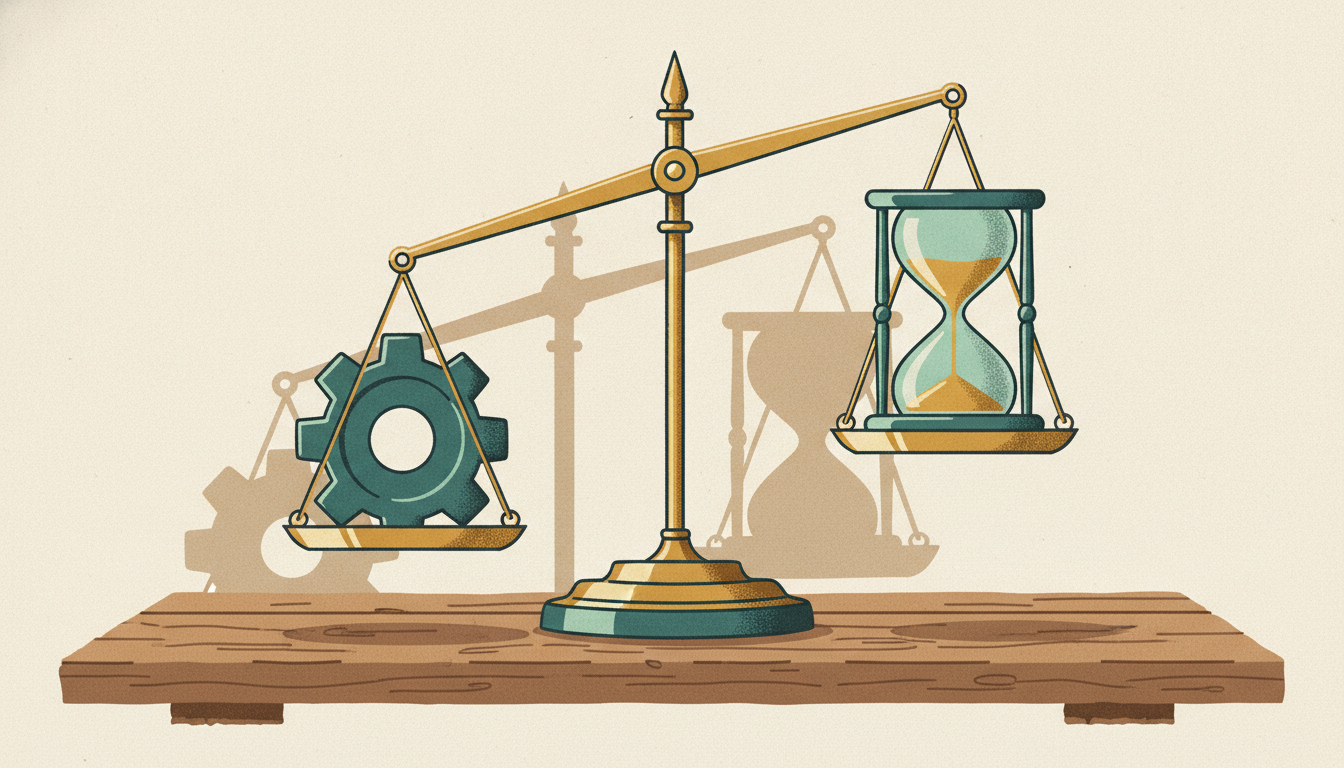
If you are buying a truck, machine or oven that will earn money for years, equipment financing is usually the better fit: the equipment itself secures the deal, payments are monthly, and the term can match the equipment's useful life. A merchant cash advance is fast cash for a short gap, repaid daily or weekly from sales, and usually costs much more. In 2026, compare both in total dollars.
The short version
| Point | Equipment financing | Merchant cash advance |
|---|---|---|
| What it is | A loan or lease to buy a specific piece of equipment | Cash now for a slice of future sales |
| What secures it | The equipment itself | Your future sales |
| How you pay | Fixed monthly payments | Automatic daily or weekly debits |
| How long you pay | Often matched to how long the equipment lasts | Usually a short payback |
| Cost | Interest or a finance charge | A fixed payback amount that is often much higher |
| What you own at the end | The equipment, or a buyout option on a lease | Nothing beyond the cash you got |
| Paying early | Ask about prepayment terms | Ask whether it lowers the MCA total |
| What a slow month does | The monthly payment is still due | Debits can keep coming unless there is an adjustment clause |
| Who it usually fits | Owners buying equipment that earns money for years | Owners with an urgent, short cash gap |
How equipment financing works
You pick the equipment. The lender pays the seller, and the equipment becomes the collateral for the deal. You then make monthly payments. Some lenders ask for a down payment, and some deals also cover delivery and installation.
With an equipment loan, you own the equipment. With a lease, you use it and may have a buyout option at the end. Check the end-of-lease terms in writing before you sign.
For a step-by-step walk-through, read how to get equipment financing.
Match the payments to how long the equipment earns money
The core idea is simple. A machine that earns money for years, paid off with daily debits over a short period, squeezes your cash flow while it is still paying for itself.
Here is a made-up example. Bright Crust Bakery (a made-up business) wants a new oven. All figures below are example figures only, not real offers.
Example oven price: $60,000.
Example equipment financing: total repaid $72,000, paid as $1,200 a month for 60 months. Example dollar cost: $12,000.
Example merchant cash advance: total repaid $84,000, paid as $3,500 a week for 24 weeks. Example dollar cost: $24,000.
In this example, the MCA takes about $14,000 a month out of the bakery in the first months, while the oven is still new and still earning. The financing takes $1,200 a month, spread over the years the oven is in use.
SBA 504 loans for bigger equipment
For major purchases, the U.S. Small Business Administration has the 504 loan program. In the words of SBA.gov: "The 504 loan program provides long-term, fixed rate financing for major fixed assets that promote business growth and job creation."
SBA.gov lists long-term machinery and equipment among the eligible uses of 504 loans. See all SBA programs on the SBA loans page, and read SBA loan vs merchant cash advance. This is general information only.
When an MCA tends to fit instead
An MCA tends to fit only an urgent, short cash gap, such as a repair this week or a seasonal stock-up, when your sales can carry daily or weekly debits and cheaper options said no. It is usually not a good fit for equipment that will last for years.
If an MCA is truly your only option, check:
The total you repay
How often money comes out
Whether there is an adjustment (reconciliation) clause
Fees taken off the top
Early-payoff terms
Whether a second advance is being stacked on the first
Read is a merchant cash advance a good idea and our guide to MCA contract clauses.
Watch for fake equipment sellers
Before any money moves, confirm that the seller and the equipment are real. Never pay a deposit to a seller you cannot verify. See our fake equipment dealer scam report for the warning signs.
Cheaper options to check before an MCA
How to compare equipment financing and an MCA in dollars
Write down the cash or equipment value you actually get after fees.
Write down the total you will repay.
Subtract: the dollar cost is the total repaid minus the amount received.
Note how much leaves your account each week or month.
Ask for an estimated APR in writing.
Our cost of capital calculator can help you run the numbers.
What some state regulators now require MCA providers to show you
The New York State Department of Financial Services adopted a Commercial Finance Disclosure Law regulation. It appears as Part 600 of the state's regulations (23 NYCRR Part 600) and covers certain commercial financing.
The California Department of Financial Protection and Innovation lists the disclosures required for commercial financing, including total funds provided, total dollar cost, the term or estimated term, and how and how often payments are made.
Wherever you are, ask for the disclosure in writing. This is general information, not legal advice.
Already have an MCA or getting broker calls?
Every other way to fund your business
See every way to fund your business.
More comparisons:
Sources
Checked on SBA.gov, DFS.NY.gov and DFPI.CA.gov in October 2026.