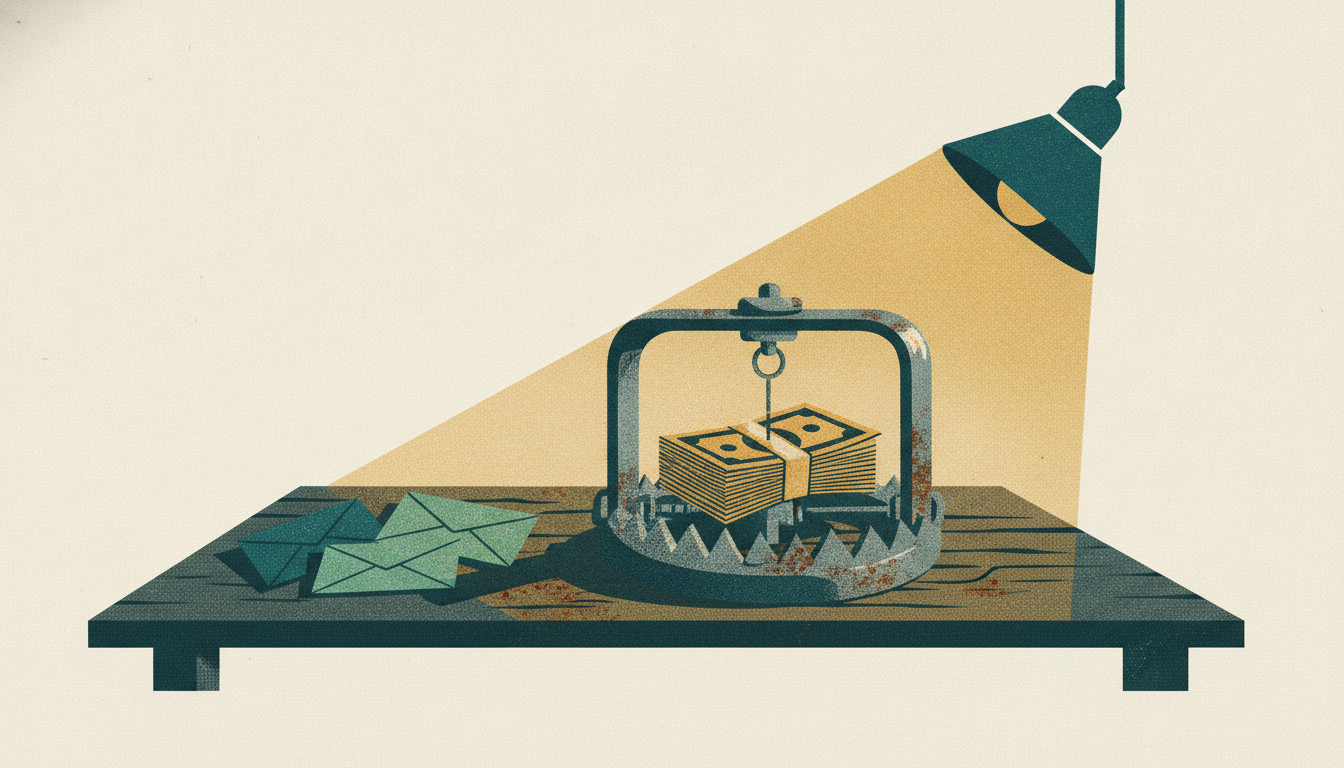
Friday payroll is $40,000, the draw is three weeks late, and the tax deposit is sitting right there. When a draw slips, a contractor's decision is which bill waits, and the IRS deposit should never be the one. Withheld taxes are trust fund money, and the penalty can follow the owner personally.
This is general information, not legal, tax or financial advice. Talk to a CPA or enrolled agent about your own facts.
Why is the payroll tax deposit not spare cash?
Because part of it was never yours. IRS Publication 15 calls withheld federal income tax and the employee share of Social Security and Medicare "trust fund taxes." You hold them for the employee until the deposit is made: https://www.irs.gov/publications/p15
If those taxes are not deposited and cannot be collected from the business, the trust fund penalty is 100% of the unpaid trust fund tax. It can be assessed on each person the IRS finds responsible who acted willfully. That can include an owner, an officer, or anyone who signs checks.
The IRS also says that using available funds to pay other creditors when the business cannot pay its employment taxes is an indication of willfulness. Paying the crew and the supplier first is exactly that pattern.
What does a late deposit cost before any personal penalty?
Publication 15 sets tiers on the amount not deposited on time:
- 2% For deposits made 1 to 5 days late
- 5% For deposits made 6 to 15 days late
- 10% For deposits made 16 or more days late, before 10 days after the first IRS notice
- 15% For amounts still unpaid more than 10 days after the first notice or a demand for immediate payment
Interest runs on top. The penalties stack quietly while you wait on a GC.
What does that look like on one payroll?
All names and numbers are made up.
Harlan Framing runs a $40,000 gross payroll. It withholds $4,200 of federal income tax and $3,060 of employee Social Security and Medicare (7.65%). It also owes the matching $3,060 employer share. The full deposit is $10,320, and $7,260 of it is trust fund money.
A pay application from the GC slips three weeks. If Harlan deposits 8 days late, the 5% tier costs $516. If the deposit is still unpaid 10 days after the first notice, the 15% tier is $1,548. If the business cannot pay at all, the $7,260 trust fund piece can be assessed against the owner personally.
Small employers who fell behind often ask online what the IRS can actually do. The honest answer is in that last line.
A deposit was already missed. What now?
Move fast, because the tiers climb with days late.
- Make the deposit as soon as you can, even if it is partial. Less undeposited tax means a smaller penalty base.
- File Form 941 on time anyway. A missing return adds its own problem.
- If you cannot pay in full, ask about a payment plan. The IRS says business taxpayers should call the number on the notice or 800-829-4933: https://www.irs.gov/payments/payment-plans-installment-agreements
- Ask a CPA or enrolled agent whether reasonable cause or a first-time waiver applies.
- Keep paying current deposits in full while the old balance is worked out.
The IRS warns that unpaid taxes can lead to a Notice of Federal Tax Lien or a levy. A lien is a public notice to creditors, which is why it can surface when a surety or lender reviews the company.
What should bridge payroll instead?
Fund the payroll, not the deposit gap. Options include reserves, an existing line of credit, or a working capital product sized to the draw lag. Compare cost shapes before you sign. A merchant cash advance is a sale of future receivables with a different cost structure, not a loan. See https://mcafax.com/notebook/sba-loan-vs-merchant-cash-advance
For contractor funding basics, start at https://mcafax.com/notebook/construction-business-loans and compare paths at https://mcafax.com/notebook/where-to-get-business-funding . If you are about to start prevailing-wage work, size the weekly payroll gap before you bid, and start with the contractor funding guide at https://mcafax.com/notebook/construction-business-loans .
