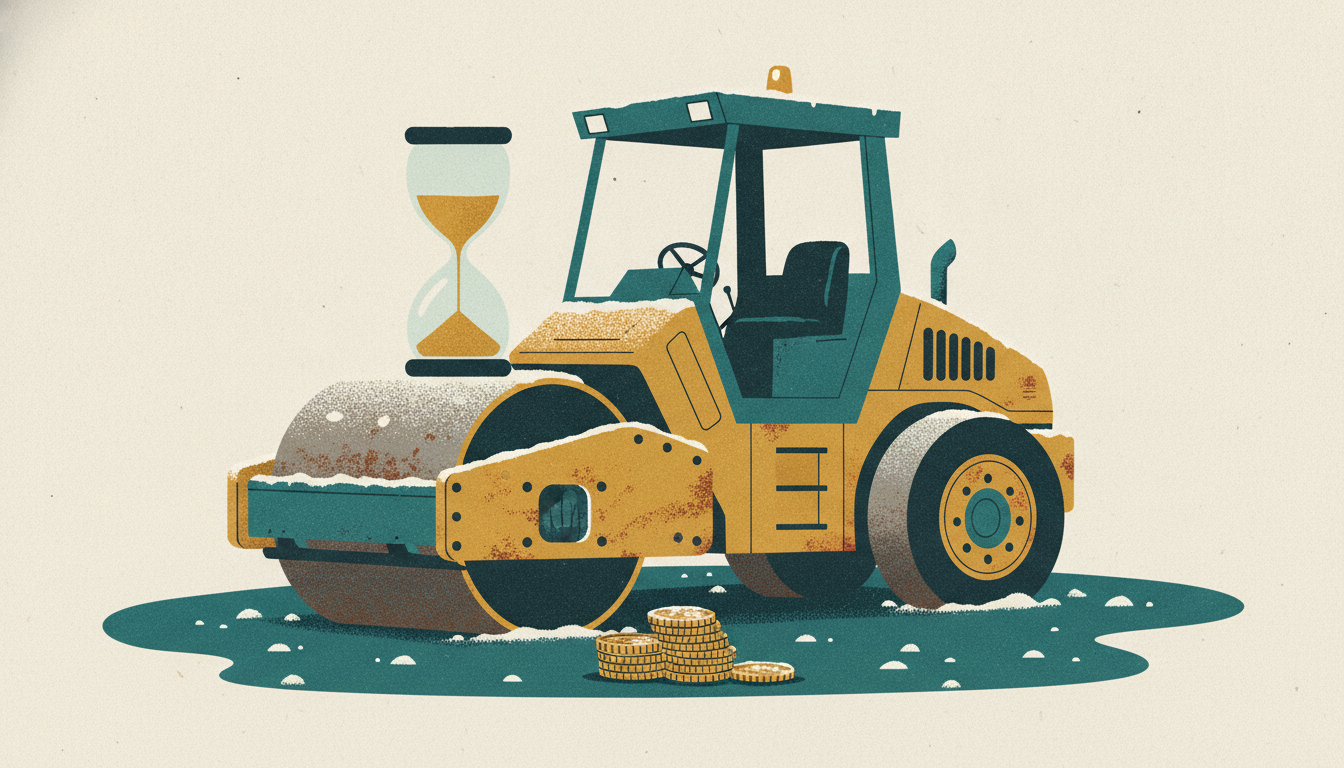
What if the paver payment skipped January and ran $5,266 in July instead?
Yes, some lenders and lessors offer equipment payments that skip or shrink in winter. The decision factor for a paving, landscaping or roofing contractor is which months the machine actually earns. A seasonal schedule matches payments to those months, but interest keeps running while the balance sits there. Size it from 24 months of deposits.
General info, not legal or financial advice.
What does a seasonal or skip-payment schedule look like?
There are a few common shapes. Availability, terms and limits vary by lender and by how well you can document your season.
- Skip-payment: no payment in set months, often the winter stretch
- Step or reduced: smaller payments in slow months, larger ones in peak months
- Deferred first payment: the first payment starts after the machine is working
The lender will want proof the season is real. That usually means bank statements showing the pattern, not just your word.
What does skipping winter actually cost?
Interest keeps running in the months you don't pay. So the balance stays higher longer, and total interest goes up.
Worked example
All names and numbers are made up.
Blacktop Bros, a paving contractor, finances $140,000 for a paver at 9% for 48 months. The loan starts in January.
On a level schedule, Blacktop pays about $3,484 a month, every month, and total interest is about $27,227. On a seasonal schedule, it pays only April through November, 8 months a year. That is 32 payments of about $5,266, and total interest is about $28,513.
The seasonal schedule costs about $1,286 more in interest over 4 years. In exchange, Blacktop pays nothing from December through March, the months it earns nothing.
Now look at the winter cash. On the level schedule, December through March means 4 payments of $3,484, or $13,936, paid from reserves while no paving gets billed. On the seasonal schedule, that $13,936 stays in the bank for payroll and insurance. The cost of keeping it there is the extra $1,286 in interest.
That trade can be worth it when the other choice is draining reserves or paying late in February.
How do you know if your season is strong enough?
Pull 24 months of business bank statements. Write monthly deposits in two rows, one per year.
- Mark the months where deposits drop below your fixed costs.
- Check both years. One soft winter isn't a pattern.
- Find your peak months and ask if they can carry a payment about 1.5 times the level one.
- Total the off-season gap. That is what a skip schedule has to cover.
If the slow months still cover a level payment, the level schedule is cheaper. If they don't, a seasonal schedule may keep the machine and the business safe.
What should you ask before you sign?
Put these questions to the lender in writing:
- Which months are skipped or reduced, and can that change later?
- Does interest accrue in the skip months, and how much does it add in total?
- Is there a fee for the seasonal schedule?
- What happens if your season shifts, like a late spring?
- Is there a prepayment penalty if a good year lets you pay early?
Compare the seasonal quote with a level quote on the same machine and term.
What if you need help with more than the equipment note?
A seasonal equipment schedule fixes one bill. It does not cover winter payroll, insurance or rent. For that, some contractors look at a seasonal working capital line.
SBA 7(a) loans can be used for working capital and for machinery and equipment through a lender: https://www.sba.gov/funding-programs/loans/7a-loans. The seasonal SBA line is covered here: https://mcafax.com/notebook/sba-7a-seasonal-capline-slow-season. The SBA also has a guide to managing business finances: https://www.sba.gov/business-guide/manage-your-business/manage-your-finances
A seasonal equipment loan is still an equipment loan, not a merchant cash advance: https://mcafax.com/notebook/equipment-financing-vs-merchant-cash-advance
More equipment basics: loan vs lease at https://mcafax.com/notebook/contractor-equipment-loan-vs-lease and how long funding takes at https://mcafax.com/notebook/contractor-equipment-funding-timeline. The contractor funding guide: https://mcafax.com/notebook/construction-business-loans. Funding types side by side: https://mcafax.com/notebook/where-to-get-business-funding
